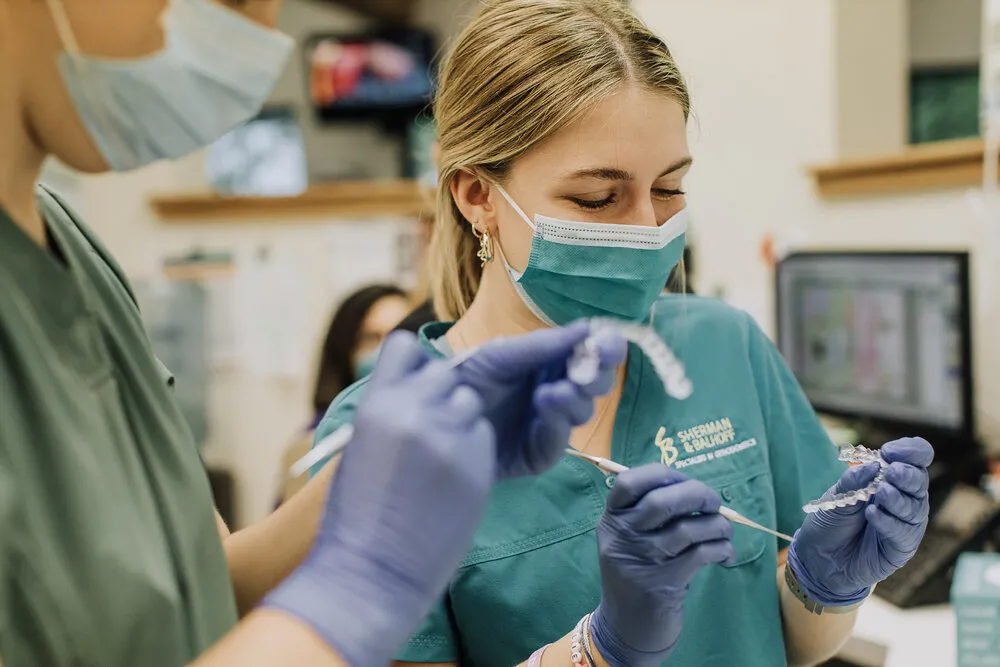
We are the #1 provider of Invisalign in the Baton Rouge area and one of the top Invisalign providers in the world! If you’re looking to straighten your smile without all the metal, Invisalign is a perfect choice!
Braces may not always be the best option for your child. Invisalign First is a treatment plan designed specifically for children since their jaws are still developing, and they often have a mixture of baby teeth and permanent teeth.
Invisalign Teen was developed with the unique needs of teenagers in mind. Plus, users of Invisalign Teen won’t have to avoid any activities or foods. Enjoy your orthodontic treatment the way you want to!
Are you looking for a treatment option that is more discreet than braces? Not only are Invisalign aligners virtually invisible, but they are also removable, so you can enjoy a more natural smile throughout treatment.
Are you considering Invisalign as an option for treatment? We’ve put together a guide with a few of the most common questions our team receives about Invisalign.
Invisalign offers benefits such as being virtually invisible, removable for easy cleaning, and allowing you to eat without restrictions. It's a comfortable and convenient option for straightening teeth, especially for teens and children with active lifestyles.
How does Invisalign treatment work?
Invisalign treatment involves wearing custom-made clear aligners that gradually shift teeth into the desired position. Patients wear each set of aligners for about two weeks, removing them only to eat, drink, brush, and floss. Regular check-ups monitor progress and provide new sets of aligners as needed until the desired results are achieved.
Can Invisalign fix complex dental issues?
Invisalign can address various complex dental issues, including overcrowding, gaps, and misalignments. However, severe cases may require traditional braces for optimal results. Consulting with an orthodontist will determine the best treatment plan for individual needs.
Whats the average cost of Invisalign treatment?
The average cost of Invisalign treatment typically ranges from $3,000 to $7,000, depending on various factors such as the complexity of the case, the duration of treatment, and the specific needs of the patient. Additional costs may include retainers and follow-up appointments. It's best to consult with an orthodontist for an accurate estimate.
How long does Invisalign treatment typically take?
Invisalign treatment typically takes about 12 to 18 months, but the duration can vary based on individual needs and complexity of the case. Compliance with wearing aligners as instructed and attending regular appointments can impact treatment length.
Are there any dietary restrictions with Invisalign?
Invisalign aligners are removable, so there are no dietary restrictions. You can enjoy all your favorite foods without worrying about damaging the aligners. Just remember to brush your teeth before putting them back in to maintain good oral hygiene.
How often do you need to visit the dentist during Invisalign treatment?
During Invisalign treatment, you typically need to visit the dentist every 6-8 weeks for check-ups and adjustments. These visits ensure the treatment is progressing as planned and allow for any necessary modifications to be made for optimal results.
Is Invisalign treatment painful?
Invisalign treatment is generally not painful. Patients may experience some discomfort or pressure when switching to a new set of aligners, but it is usually mild and temporary. This discomfort is a sign that the treatment is working as intended to gradually shift the teeth into the desired position.
Can teenagers use Invisalign?
Yes, teenagers can use Invisalign Teen, specially designed for their unique needs. Invisalign aligners are virtually invisible and removable, allowing teens to maintain their lifestyle without restrictions. It's a great option for straightening teeth discreetly.
What is the success rate of Invisalign treatment?
The success rate of Invisalign treatment is high, with many patients achieving desired results. Compliance with wearing aligners as instructed and following the orthodontist's guidance are key factors in achieving successful outcomes. Regular check-ups and adjustments help monitor progress and ensure treatment effectiveness.
What distinguishes Invisalign from braces?
Invisalign is distinguishable from braces because it is virtually invisible, removable, and allows for enjoying all foods and activities without restrictions. Invisalign aligners are custom-made for a comfortable fit and are a popular choice for teens and children due to their discreet nature and convenience.
Is Invisalign a suitable option for adults?
Yes, Invisalign is a suitable option for adults seeking to straighten their smiles discreetly. The clear aligners are removable, allowing for easy maintenance and flexibility in daily activities. Invisalign treatment offers a comfortable and virtually invisible way to achieve a straighter smile for adults of all ages.
Are there Invisalign aftercare requirements?
After completing Invisalign treatment, wearing retainers as directed by the orthodontist is crucial to maintain the results. Regular dental check-ups, proper oral hygiene, and avoiding hard foods are essential for long-term success.
How do you clean Invisalign aligners?
To clean Invisalign aligners, use a soft-bristled toothbrush with clear, antibacterial soap or Invisalign cleaning crystals. Gently brush the aligners inside and out, rinse with lukewarm water, and avoid hot water to prevent warping. Avoid colored soaps, toothpaste, or harsh chemicals to maintain clarity.
Can Invisalign aligners stain, and why?
Invisalign aligners can stain if not properly cared for. Factors like consuming colored drinks, smoking, or not cleaning the aligners regularly can lead to discoloration. To prevent staining, it's essential to follow the recommended cleaning instructions provided by your orthodontist and avoid behaviors that can cause discoloration.
What happens after Invisalign treatment ends?
After Invisalign treatment ends, patients typically transition to wearing retainers to maintain their newly aligned teeth. Retainers help prevent teeth from shifting back to their original positions. Regular dental check-ups are essential to monitor the results and ensure long-term success.
How visible are Invisalign aligners?
Invisalign aligners are virtually invisible, making them discreet and ideal for those seeking a more subtle orthodontic treatment option.
Can you whiten teeth during Invisalign treatment?
Whitening teeth during Invisalign treatment is not recommended as the aligners cover the teeth, preventing consistent whitening results. It's best to wait until after treatment for teeth whitening procedures to ensure even and effective results.
Are retainers required after Invisalign treatment?
Retainers are typically required after completing Invisalign treatment to maintain the results achieved. Retainers help prevent teeth from shifting back to their original positions. Your orthodontist will provide specific instructions on how long and when to wear retainers based on your individual case.
How soon can you see Invisalign results?
You may start noticing results from Invisalign treatment in as little as a few weeks. However, the full transformation typically takes around 12 to 18 months, depending on individual needs and compliance with wearing the aligners as directed by your orthodontist. Consistent wear is key to achieving desired results.
Does Invisalign affect speaking or pronunciation?
Invisalign may temporarily affect speech or pronunciation as the mouth adjusts to the aligners. With practice, most users adapt quickly, and any speech changes are minimal. Regular wear and proper care of the aligners help maintain comfort and speech clarity throughout treatment.
Whats the youngest age for Invisalign treatment?
Invisalign First is designed for children with developing jaws and a mix of baby and permanent teeth, making it suitable for younger ages. Typically, children around the age of 7 can start Invisalign treatment with Invisalign First.
Can you drink coffee with Invisalign aligners?
Yes, you can drink coffee with Invisalign aligners, but it's recommended to remove them to avoid staining. Rinse your mouth with water before putting the aligners back in. Avoid hot beverages as they can warp the aligners.
How often must Invisalign aligners be worn?
Invisalign aligners should be worn for 20 to 22 hours per day to be effective. They should only be removed for eating, drinking (except water), and oral hygiene routines. Consistency in wearing the aligners is crucial for successful treatment outcomes.
Will dental insurance cover Invisalign treatment?
Dental insurance may cover a portion of Invisalign treatment costs, depending on your specific plan. It's advisable to check with your insurance provider to understand the extent of coverage for orthodontic procedures like Invisalign. Some plans offer benefits that can help offset the expenses associated with treatment.
Can Invisalign aligners be removed for meals?
Yes, Invisalign aligners can be removed for meals, allowing you to enjoy your favorite foods without restrictions. Simply take out the aligners before eating, brush your teeth, and then put them back in afterward to continue your treatment effectively.
Do you need referrals for Invisalign consultation?
No, referrals are not required for an Invisalign consultation. Simply contact our office to schedule a complimentary initial consultation for Invisalign treatment. Our friendly and professional team will guide you through the process without the need for a referral.
Are there alternative treatments to Invisalign?
Yes, there are alternative treatments to Invisalign, such as traditional braces, ceramic braces, lingual braces, and clear aligners like ClearCorrect. Each option has its own benefits and considerations, so it's best to consult with an orthodontist to determine the most suitable treatment for your specific needs.
How does smoking affect Invisalign treatment?
Smoking can discolor and weaken Invisalign aligners, affecting their effectiveness. It can also lead to gum disease and hinder the teeth-straightening process. Additionally, smoking may cause aligners to become more noticeable due to staining, impacting the discreet nature of treatment.
Can Invisalign correct bite issues effectively?
Invisalign can effectively correct mild to moderate bite issues, such as overbites, underbites, and crossbites. However, severe cases may require traditional braces for optimal results. It's best to consult with an orthodontist to determine the most suitable treatment for specific bite concerns.
Invisalign offers benefits such as being virtually invisible, removable for easy cleaning, and allowing you to eat without restrictions. It's a comfortable and convenient option for straightening teeth, especially for teens and children with active lifestyles.
How does Invisalign treatment work?
Invisalign treatment involves wearing custom-made clear aligners that gradually shift teeth into the desired position. Patients wear each set of aligners for about two weeks, removing them only to eat, drink, brush, and floss. Regular check-ups monitor progress and provide new sets of aligners as needed until the desired results are achieved.
Can Invisalign fix complex dental issues?
Invisalign can address various complex dental issues, including overcrowding, gaps, and misalignments. However, severe cases may require traditional braces for optimal results. Consulting with an orthodontist will determine the best treatment plan for individual needs.
Whats the average cost of Invisalign treatment?
The average cost of Invisalign treatment typically ranges from $3,000 to $7,000, depending on various factors such as the complexity of the case, the duration of treatment, and the specific needs of the patient. Additional costs may include retainers and follow-up appointments. It's best to consult with an orthodontist for an accurate estimate.
How long does Invisalign treatment typically take?
Invisalign treatment typically takes about 12 to 18 months, but the duration can vary based on individual needs and complexity of the case. Compliance with wearing aligners as instructed and attending regular appointments can impact treatment length.
Are there any dietary restrictions with Invisalign?
Invisalign aligners are removable, so there are no dietary restrictions. You can enjoy all your favorite foods without worrying about damaging the aligners. Just remember to brush your teeth before putting them back in to maintain good oral hygiene.
How often do you need to visit the dentist during Invisalign treatment?
During Invisalign treatment, you typically need to visit the dentist every 6-8 weeks for check-ups and adjustments. These visits ensure the treatment is progressing as planned and allow for any necessary modifications to be made for optimal results.
Is Invisalign treatment painful?
Invisalign treatment is generally not painful. Patients may experience some discomfort or pressure when switching to a new set of aligners, but it is usually mild and temporary. This discomfort is a sign that the treatment is working as intended to gradually shift the teeth into the desired position.
Can teenagers use Invisalign?
Yes, teenagers can use Invisalign Teen, specially designed for their unique needs. Invisalign aligners are virtually invisible and removable, allowing teens to maintain their lifestyle without restrictions. It's a great option for straightening teeth discreetly.
What is the success rate of Invisalign treatment?
The success rate of Invisalign treatment is high, with many patients achieving desired results. Compliance with wearing aligners as instructed and following the orthodontist's guidance are key factors in achieving successful outcomes. Regular check-ups and adjustments help monitor progress and ensure treatment effectiveness.
What distinguishes Invisalign from braces?
Invisalign is distinguishable from braces because it is virtually invisible, removable, and allows for enjoying all foods and activities without restrictions. Invisalign aligners are custom-made for a comfortable fit and are a popular choice for teens and children due to their discreet nature and convenience.
Is Invisalign a suitable option for adults?
Yes, Invisalign is a suitable option for adults seeking to straighten their smiles discreetly. The clear aligners are removable, allowing for easy maintenance and flexibility in daily activities. Invisalign treatment offers a comfortable and virtually invisible way to achieve a straighter smile for adults of all ages.
Are there Invisalign aftercare requirements?
After completing Invisalign treatment, wearing retainers as directed by the orthodontist is crucial to maintain the results. Regular dental check-ups, proper oral hygiene, and avoiding hard foods are essential for long-term success.
How do you clean Invisalign aligners?
To clean Invisalign aligners, use a soft-bristled toothbrush with clear, antibacterial soap or Invisalign cleaning crystals. Gently brush the aligners inside and out, rinse with lukewarm water, and avoid hot water to prevent warping. Avoid colored soaps, toothpaste, or harsh chemicals to maintain clarity.
Can Invisalign aligners stain, and why?
Invisalign aligners can stain if not properly cared for. Factors like consuming colored drinks, smoking, or not cleaning the aligners regularly can lead to discoloration. To prevent staining, it's essential to follow the recommended cleaning instructions provided by your orthodontist and avoid behaviors that can cause discoloration.
What happens after Invisalign treatment ends?
After Invisalign treatment ends, patients typically transition to wearing retainers to maintain their newly aligned teeth. Retainers help prevent teeth from shifting back to their original positions. Regular dental check-ups are essential to monitor the results and ensure long-term success.
How visible are Invisalign aligners?
Invisalign aligners are virtually invisible, making them discreet and ideal for those seeking a more subtle orthodontic treatment option.
Can you whiten teeth during Invisalign treatment?
Whitening teeth during Invisalign treatment is not recommended as the aligners cover the teeth, preventing consistent whitening results. It's best to wait until after treatment for teeth whitening procedures to ensure even and effective results.
Are retainers required after Invisalign treatment?
Retainers are typically required after completing Invisalign treatment to maintain the results achieved. Retainers help prevent teeth from shifting back to their original positions. Your orthodontist will provide specific instructions on how long and when to wear retainers based on your individual case.
How soon can you see Invisalign results?
You may start noticing results from Invisalign treatment in as little as a few weeks. However, the full transformation typically takes around 12 to 18 months, depending on individual needs and compliance with wearing the aligners as directed by your orthodontist. Consistent wear is key to achieving desired results.
Does Invisalign affect speaking or pronunciation?
Invisalign may temporarily affect speech or pronunciation as the mouth adjusts to the aligners. With practice, most users adapt quickly, and any speech changes are minimal. Regular wear and proper care of the aligners help maintain comfort and speech clarity throughout treatment.
Whats the youngest age for Invisalign treatment?
Invisalign First is designed for children with developing jaws and a mix of baby and permanent teeth, making it suitable for younger ages. Typically, children around the age of 7 can start Invisalign treatment with Invisalign First.
Can you drink coffee with Invisalign aligners?
Yes, you can drink coffee with Invisalign aligners, but it's recommended to remove them to avoid staining. Rinse your mouth with water before putting the aligners back in. Avoid hot beverages as they can warp the aligners.
How often must Invisalign aligners be worn?
Invisalign aligners should be worn for 20 to 22 hours per day to be effective. They should only be removed for eating, drinking (except water), and oral hygiene routines. Consistency in wearing the aligners is crucial for successful treatment outcomes.
Will dental insurance cover Invisalign treatment?
Dental insurance may cover a portion of Invisalign treatment costs, depending on your specific plan. It's advisable to check with your insurance provider to understand the extent of coverage for orthodontic procedures like Invisalign. Some plans offer benefits that can help offset the expenses associated with treatment.
Can Invisalign aligners be removed for meals?
Yes, Invisalign aligners can be removed for meals, allowing you to enjoy your favorite foods without restrictions. Simply take out the aligners before eating, brush your teeth, and then put them back in afterward to continue your treatment effectively.
Do you need referrals for Invisalign consultation?
No, referrals are not required for an Invisalign consultation. Simply contact our office to schedule a complimentary initial consultation for Invisalign treatment. Our friendly and professional team will guide you through the process without the need for a referral.
Are there alternative treatments to Invisalign?
Yes, there are alternative treatments to Invisalign, such as traditional braces, ceramic braces, lingual braces, and clear aligners like ClearCorrect. Each option has its own benefits and considerations, so it's best to consult with an orthodontist to determine the most suitable treatment for your specific needs.
How does smoking affect Invisalign treatment?
Smoking can discolor and weaken Invisalign aligners, affecting their effectiveness. It can also lead to gum disease and hinder the teeth-straightening process. Additionally, smoking may cause aligners to become more noticeable due to staining, impacting the discreet nature of treatment.
Can Invisalign correct bite issues effectively?
Invisalign can effectively correct mild to moderate bite issues, such as overbites, underbites, and crossbites. However, severe cases may require traditional braces for optimal results. It's best to consult with an orthodontist to determine the most suitable treatment for specific bite concerns.